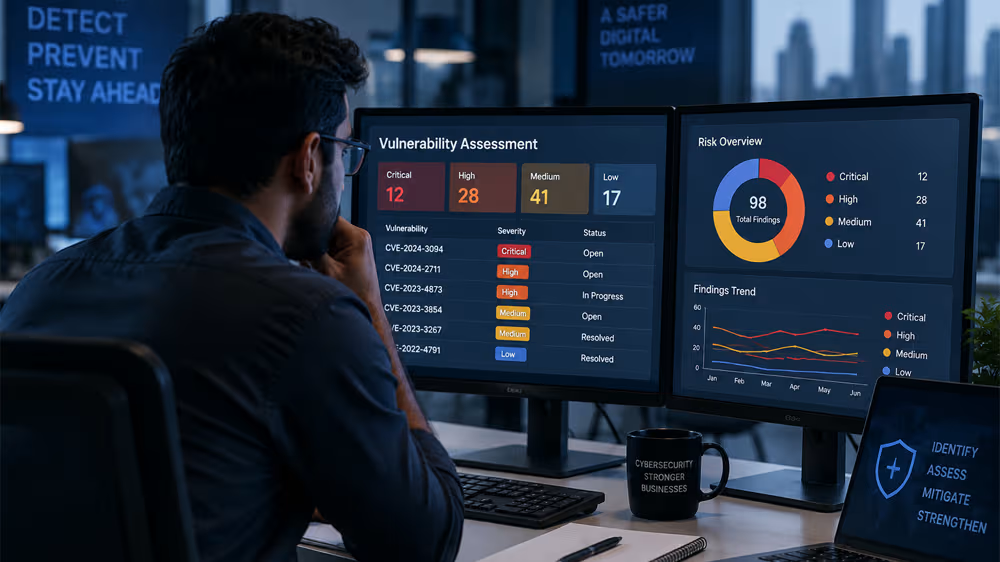

GRC in Cybersecurity: A Practical Guide for Businesses
Many businesses invest heavily in firewalls, endpoint protection, and cloud security tools. Yet when a regulator asks about risk ownership, policy enforcement, or breach response accountability, leadership often struggles to answer clearly.
That gap is where GRC in Cybersecurity becomes essential.
Governance, risk, and compliance are not paperwork exercises. They define how cybersecurity decisions are made, who is responsible, and how risks are controlled across the organization. Without GRC, even strong technical controls can fail under pressure.

What GRC in Cybersecurity Really Means
GRC in Cybersecurity connects security controls to business strategy.
Governance defines who makes security decisions and how accountability flows through the organization. Risk management identifies threats, evaluates impact, and prioritizes mitigation. Compliance ensures the business meets regulatory, contractual, and industry requirements.
When these three elements work together, cybersecurity becomes structured and measurable instead of reactive.
At Defense Numerique, GRC is approached as a leadership function, not just a technical one. Security must support growth, protect reputation, and align with long-term business goals.
Why Businesses Struggle Without GRC
Many organizations operate with informal security practices. Policies may exist, but they are outdated or not enforced. Risk assessments are conducted once for audits and then forgotten. Incident response plans sit unused until a crisis hits.
This creates hidden exposure.
Without formal Governance, Risk and Compliance Services, businesses often:
- Fail to identify critical risks early
- Overlook compliance gaps
- Duplicate security investments
- Struggle during audits or investigations
- React slowly during incidents
GRC brings clarity. It defines what matters most and ensures controls are aligned with real business priorities.
Governance: Defining Responsibility and Direction
Governance answers a simple question: who owns cybersecurity?
When leadership roles and reporting structures are unclear, decisions get delayed. During a security incident, confusion spreads quickly.
Strong governance establishes:
- Clear security ownership
- Defined escalation paths
- Board-level visibility
- Policy enforcement mechanisms
At Defense Numerique, governance frameworks are designed to fit how the organization operates, not copied from generic templates.
Risk Management: Seeing the Threat Before It Becomes Damage
Risk management is the practical core of GRC in Cybersecurity.
It identifies vulnerabilities, evaluates likelihood and impact, and prioritizes mitigation based on business importance. Not every risk requires the same level of control. Smart organizations focus resources where exposure is highest.
Professional GRC Consulting helps businesses move from reactive security to proactive planning. Instead of responding to incidents after they happen, organizations learn to anticipate and reduce exposure.
Compliance: More Than Passing an Audit
Compliance requirements continue to increase across industries. Financial institutions, healthcare providers, logistics firms, and government contractors face strict oversight.
However, compliance alone does not equal security.
The right approach to Governance, Risk and Compliance Services ensures that compliance strengthens overall security posture rather than becoming a checklist exercise.
At Defense Numerique, compliance programs are integrated with operational controls, risk management, and executive reporting to create a complete governance structure.
If you want to explore how structured Governance, Risk and Compliance Services are implemented in practice, you can learn more here:
https://defense-numerique.io/governance-risk-and-compliance-services-in-dubai/
Why GRC Strengthens Long-Term Resilience
Cyber incidents test leadership, not just systems.
Organizations with mature GRC frameworks respond faster, communicate clearly, and recover with less disruption. Decision-making is structured. Roles are defined. Risk tolerance is documented.
As a trusted security partner, Defense Numerique helps businesses build governance structures that stand up to regulatory scrutiny and operational stress.
GRC is not about slowing business down. It is about enabling growth without unmanaged exposure.
When properly implemented, GRC in Cybersecurity provides confidence to investors, regulators, and customers alike.
FAQ's
01.
GRC in Cybersecurity combines governance, risk management, and compliance to ensure security controls align with business goals and regulatory requirements.
02.
They provide structure, accountability, and measurable risk management, helping businesses avoid regulatory penalties and operational disruptions.
03.
GRC Consulting includes risk assessments, policy development, compliance mapping, governance framework design, and executive reporting structures.
04.
No. Small and mid-sized businesses benefit significantly from structured governance and risk management, especially as regulatory demands increase.
05.
Defense Numerique builds tailored governance frameworks aligned with business objectives, regulatory needs, and operational realities.
Tags :
Blog
Follow Us :
Related Post